- calendar_today October 12, 2026
Major Investments in Michigan River Restoration
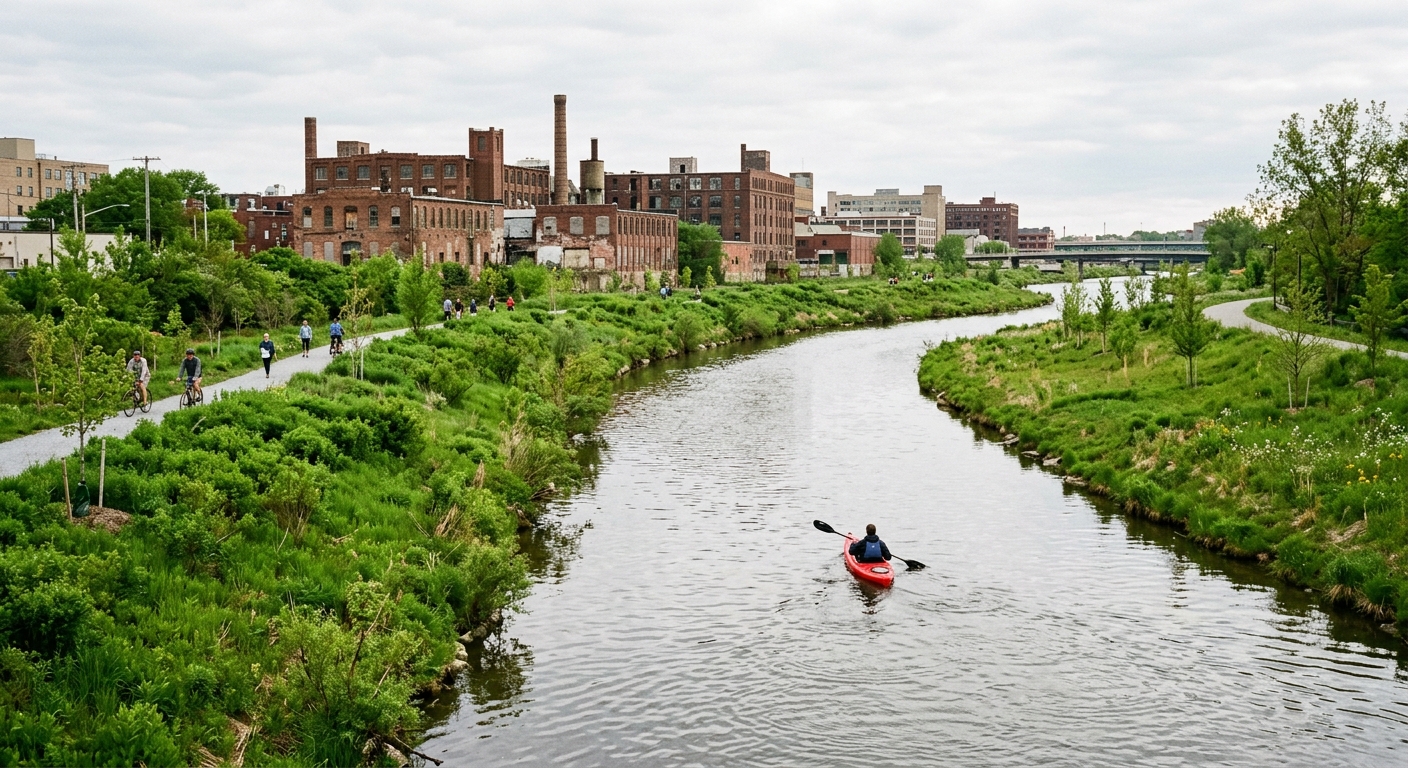
Across Michigan, communities are making significant investments in their rivers. Projects such as dam removals, renaturalization initiatives, and riverfront redevelopment aim to rejuvenate waterways and stimulate both ecological and economic benefits. Recent efforts include restoring downtown riverfronts, and the state government announced an $89 million package for cleaning up rivers like the Detroit and Kalamazoo earlier this month.
Restoration Initiatives Around the State
From southeast Michigan's Lower Rouge River to downtown Grand Rapids, cities are embracing river restoration. For example, Battle Creek is exploring renaturalizing a concrete channel on the Kalamazoo River, and Flint is developing a state park around its riverfront. Grand Rapids is undertaking an estimated $19 million project to restore rapids to the Grand River.
Traverse City completed what is considered Michigan's largest dam removal project by taking out three dams along the Boardman River, reconnecting coldwater streams and improving fish habitat at a cost of more than $27 million. Even though direct economic benefits for some of these efforts aren’t always quantified, local administrators and advocates emphasize improved river accessibility and recreation.
Economic Impact of Waterway Restoration
The potential returns from these investments continue to be a driving force. A 2007 study by the Brookings Institution suggested that every $1 invested in freshwater restoration could generate $3 in economic returns. A more recent 2017 Grand Valley State University analysis reported that the Huron River and its water trail produced $53.5 million in annual economic output and $150 million annually in value services such as recreation, flood reduction, and rare species support.
The White River, which runs through the Huron-Manistee National Forests, was the subject of a 2023 study estimating 70,000 annual visitors and a total economic impact of $20 million. In Muskegon, Grand Valley State University professor Alan Steinman highlighted a study showing a 6-to-1 return on investment for local waterway restoration.
Balancing Environmental Benefits and Economic Growth
In many cases, restoring rivers leads to increased opportunities for recreational tourism, improved habitats for native species, and enhanced community well-being. While some, like the White River Watershed Partnership, recognize the draw and economic value of these rivers, they also emphasize the importance of preserving the natural character and balancing development with river conservation.
For example, certain stretches of the White River require added environmental oversight due to its designation as a Country-Scenic River and its protection within national forest land. John Stivers, secretary of the White River Watershed Partnership, expressed that many residents value the river's relatively undiscovered status and are cautious about turning it into a major economic engine.
Riverfront Development in Detroit and Its Outcomes
Detroit’s formerly neglected downtown waterfront has undergone a dramatic transformation with approximately $2 billion in public and private investments. The new riverfront now features greenways, parks, and over eight miles of recreational trails. According to the Detroit Riverfront Conservancy, visitors to the area spend around $82 million per year, illustrating the substantial economic impact of comprehensive riverfront development.
The Future of Michigan's Rivers
Michigan boasts over 76,000 miles of rivers, creeks, and streams, many of which remain threatened by pollution and aging infrastructure. As state and local governments, organizations, and residents continue to prioritize river restoration and water quality improvement, ongoing studies and projects will shape the future of these vital resources. While the precise economic outcomes of every initiative are not always clear, evidence and expert opinion suggest significant long-term benefits in recreation, environmental health, and community investment.
Source: bridgemi.com.