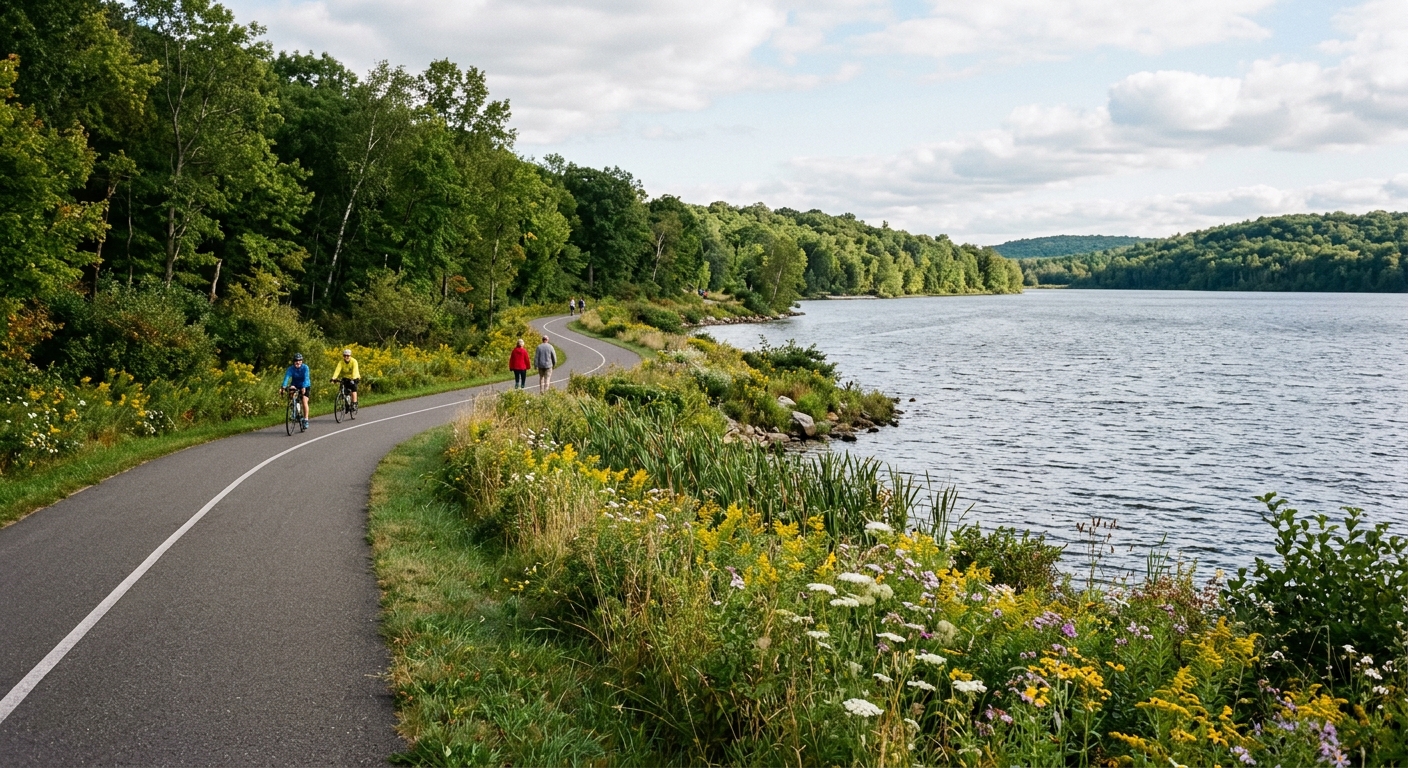
AI-generated illustration; not a photograph of the reported event.
- calendar_today November 10, 2026
New Study Shows Enormous Economic Potential from Greenways Expansion
A recent study published in Eco-Tourism and Sustainable Development has found that expanding greenways and trails in Michigan and the broader Great Lakes region could generate annual economic benefits of $3.75 billion to $5 billion. The research examined the effects of the "Great Lakes Way," a project connecting communities and natural areas to strengthen ecotourism, trail connectivity, and community revitalization across the region.
The Great Lakes Way: A Vision of Connectivity
Trails currently span 160 miles of greenways and 156 miles of "blueways," or water trails, primarily in Southeast Michigan. These greenways connect 45 communities, but study coauthor John Hartig—science-policy advisor for both the International Association of Great Lakes Research and the Great Lakes Institute for Environmental Research—notes that just 65% of these miles are fully usable. The project's ambition is to link greenways from Port Huron in Michigan to Toledo, Ohio, creating what Hartig calls "the trail of trails."
Key Contributions from Regional Organizations
The initiative involves several organizations, including the Great Lakes Institute for Environmental Research in Windsor, Ontario, and the Auburn Hills-based PEA Group—a collective of engineers, surveyors, and landscape architects who facilitate community revitalization for Michigan, neighboring states, and Ontario. Advisory committee member Todd Scott, executive director of the Detroit Greenways Coalition, highlighted the importance of maintaining quality in trail design and implementation, cautioning against shortcuts that compromise the facilities' usability.
Noteworthy Projects and Progress
Reports from 2021-2024 outline initiatives such as St. Clair County's Bridge to Bay Trail, the Downriver Linked Greenways, Huron Waterloo Pathway Initiative, Detroit Riverfront Conservancy's Detroit Riverwalk, the Iron Belle Trail in Michigan's Upper Peninsula, Joe Louis Greenway, and Monroe County's Cornerstone Trail. For instance, the Joe Louis Greenway is under construction, linking Dearborn, Hamtramck, and Highland Park, connecting these communities to statewide trail routes. According to Hartig, all planned water trails, including the Detroit Heritage River Water Trail and the River Raisin Water Trail, are complete, though Scott argues more amenities are needed to consider them fully finished.
The Detroit Riverwalk and Cross-Border Opportunities
The Detroit Riverwalk, stretching nearly 5 miles between Gabriel Richard Park and Ralph Wilson Park, has been named "Best Riverwalk in America" several times by USA Today. The opening of the Gordie Howe International Bridge last summer, connecting Canada and the United States, has led to significant increases in pedestrian and cyclist use, with usage reportedly double what the Windsor Detroit Bridge Authority projected. According to Scott, this cross-border trail acts as a vital tourist attraction, boosting the local economy on both sides of the river.
Ecotourism and Community Impact
Organized by the Waterfront Regeneration Trust, the inaugural Great Waterfront Trail Adventure cycling tour in August crossed the Gordie Howe International Bridge, bringing Canadian cyclists to Detroit. Hartig described the trail and bridge as a unique opportunity for "bridge-building and trail-building – creating a bridge between cultures and communities." While the region witnesses increased cycle tourism and related local business activity, some communities remain hesitant to participate in the broader greenways network.
Looking Ahead: Expansion and Value for Communities
Hartig indicates that interest is growing among the eight Great Lakes states to emulate Canada’s Great Lakes Waterfront Trail, building on existing, planned, and completed U.S. trails over time. He believes these initiatives can make both urban and rural communities more attractive places to live, work, and play, as trail users patronize local cafes, hotels, and rental accommodations. Despite some reluctance among certain communities, proponents highlight the sustainable economic and cultural value that trail connectivity, ecotourism, and greenways expansion can offer the entire region.
Source: bridgemi.com.