- calendar_today August 17, 2025
This story was originally published by Grist and is reproduced here as part of the Covering Climate Now collaboration.
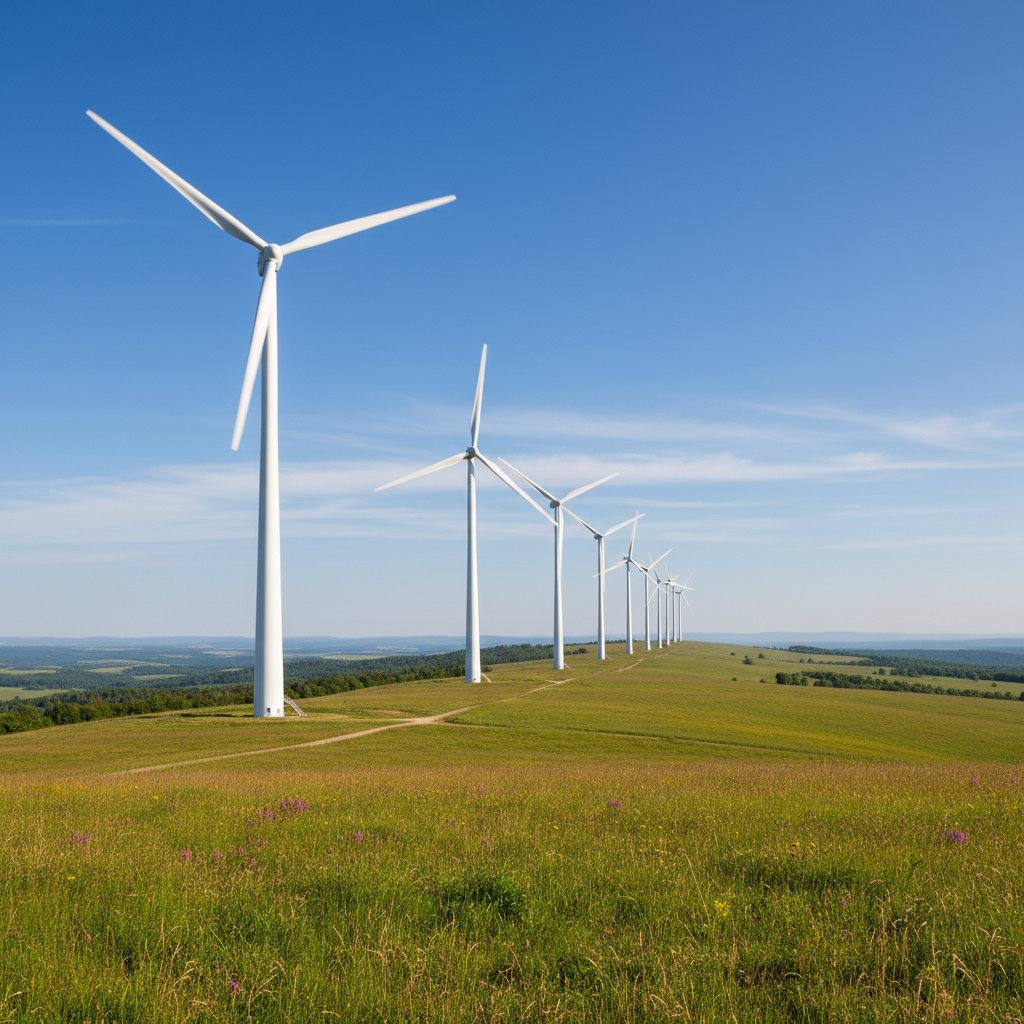
Former President Donald Trump was holding a press conference about a European Union trade deal when he decided to riff about renewable energy. Wind turbines, he said, are “a con job,” a “disgrace.” The rotating blades of white electricity production send whales “loco” and kill birds and “kids.” In addition to being a good example of a former president derailing a news conference about an EU trade deal in order to shout about wind turbines, it also neatly encapsulates a global pattern of conspiracy thinking about renewable energy.
Trump’s descriptions of wind turbines as “windmills” have now become something of a climate denier’s lingua franca, a sneer designed to dismiss renewables without having to engage with the actual arguments. Trump’s claims about the negative impacts of wind energy recall earlier waves of moral panic about technologies such as the telephone, which was thought to spread deadly diseases during the 19th century. The telephone scare was as much about people’s anxieties about the social implications of a shift in power distribution as it was about any particular fact about the technology.
A body of academic research suggests that similar dynamics might be at play today, with anxieties about renewables running much deeper than most people think. Conspiracy thinking about climate science and renewables is, once established, highly resistant to change, making them impervious to fact-checking and reassurance from technical or scientific authorities. Those of us trying to work for governments, businesses, and institutions trying to speed up the transition to clean energy should be worried by this.
The Conspiracy Anti-Wind Conspiracy Theory Origins
Climate science has been warning since at least the 1950s that carbon dioxide emissions were likely to cause profound and relatively imminent environmental change. But even during the early days of activism, renewables were as much framed as a way to take on Big Oil as they were as a way to deal with greenhouse gases. The Simpsons cartoon long ago illustrated the risk, with its billionaire energy mogul, Mr. Burns, building a tower to blot out the sun and force residents to buy his nuclear power instead. The cartoon was a satire of the risk, but it spoke to a genuine fear that fossil fuel interests would lobby, litigate, and otherwise obstruct renewable adoption.
In the decades since, fossil fuel interests have indeed repeatedly shown they were more than willing to work against the energy transition. In Australia, then–Prime Minister John Howard in 2004 convened a group of fossil fuel executives to discuss the energy transition. The Low Emissions Technology Advisory Group was as close to a conspiracy as is possible without being illegal. Its remit was not to push for decarbonization but to identify means to slow the growth of renewables and protect the dominance of coal, oil, and gas.
Wind turbines have also had to contend with strong public perceptions that they are less safe or clean than fossil fuels or nuclear power, although evidence overwhelmingly suggests the reverse. Coal mines, oilfields, and nuclear power plants are often tucked away in remote locations, hidden from the public eye. Wind turbines, by contrast, often march across ridgelines or sit atop open plains. As a result, the wind industry has had to face open hostility and conspiracy thinking about wind farms. Conspiracy theories that wind turbine syndrome (a “non-disease” according to medical experts) spreads illnesses, kills birds, or drives whales crazy have floated around the anti-wind internet for years.
And academic research from around the world suggests that the opposition to wind farms is about more than simply a demographic or a lack of education. For some people, wind turbines embody a cluster of ideas and beliefs that, once planted, are difficult to dislodge. A paper published in 2020 by Kevin Winter and colleagues, working in Germany, found that while demographic characteristics such as age, gender, education level, and political affiliation only weakly predicted people’s responses to wind energy, a strong predictor of negative responses to wind energy development was how strongly respondents leaned into conspiracy thinking more generally.
A 2023 study also conducted in Germany, and similar surveys from the U.S., U.K., and Australia, have also found that those most likely to believe that wind turbines or solar panels have negative health impacts or could cause mass blackouts or other supposed impacts were often the same people who were more likely to believe other conspiracy theories about climate change and wind turbines, including more elite conspiracies about government energy policy or threats to energy security.
In other words, for people with strong anti-science or conspiratorial worldviews, an argument about a wind farm’s impact on climate change is much less of a discussion point than an indication of whether or not they should accept it. Wind farms, by their very size and visibility, have become a symbol of the energy transition, one that can be as potent for those who view them as embodying climate action as they are for those who associate them with government control and loss of power.
At the same time, these dynamics rest on a deeper issue. For much of the fossil fuel era, success has been defined in terms of wealth, power, and ownership. Acknowledging and grappling with the fact that oil, coal, and gas have left behind a world on fire runs up against those perceptions. In research on the fossil fuel era, the idea has been summed up as a refusal to be reflexive, to engage with or learn from the negative implications of previous eras. Trump’s “Keep America Great” nostalgia is both more general and a specific example of this impulse.