- calendar_today August 20, 2025
.
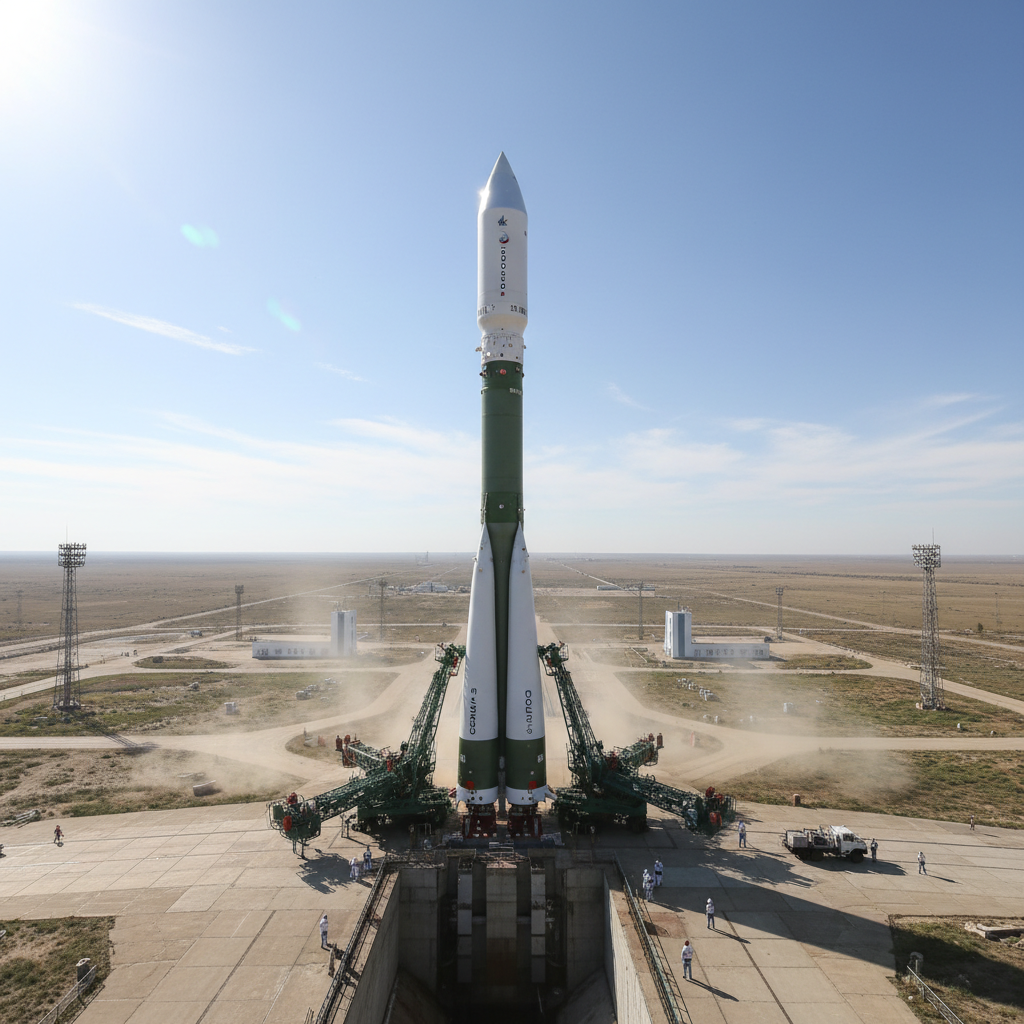
Russia is gearing up to launch the Soyuz-5 rocket for the first time by the end of the year. Dmitry Bakanov, the chief of Roscosmos, the Russian space agency, confirmed this in an interview with state media service TASS.
“Yes, it is true that December is planned for us,” Bakanov told the outlet. “All the conditions are in place.”
The launch is expected to take place from the Baikonur spaceport in Kazakhstan. If all goes according to plan, this will be the first time the rocket takes flight, a decade after its development began. Roscosmos has stated that it expects several demonstration flights before the rocket becomes operational. However, service is not likely to begin before 2028.
Soviet Roots in a Modern Era
As for the rocket itself, the Soyuz-5—or Irtysh, as it is sometimes called—is not a particularly innovative design. In fact, a lot of it harkens back to Soviet-era designs. Work on the project began in 2016, reusing older designs. The big difference is that the new rocket is made entirely in Russia.
The switch to domestic production is a big one. For years, Russia had been importing rocket components from Ukraine. It was especially true for the Zenit-2 launch vehicle. Developed in the 1980s by the Yuzhnoye Design Bureau in Dnipro, Ukraine, Zenit flew dozens of missions well into the 2010s. Its first and second stages were manufactured in Ukraine. The main engine was Russian—RD-171 from the NPO Energomash.
Russian-Ukrainian cooperation in space continued for decades after the collapse of the Soviet Union. However, it completely fell apart after Russia invaded Ukraine in 2022. By the end of 2023, Russia had even bombed the Ukrainian factory where Zenit rockets used to be assembled.
The Soyuz-5 is, in many ways, a bigger and entirely Russian-made version of Zenit. The new rocket is an attempt to wean Moscow off Ukrainian parts.
What the Rocket Can Do
The Soyuz-5 is a medium-lift rocket, able to put some 17 metric tons of payload into low-Earth orbit. Compared to Zenit-2, it has slightly larger fuel tanks. This means it can deliver more weight.
The real showpiece, however, is the RD-171MV engine, the main powerplant of the Soyuz-5. The latest version of this engine, the RD-171MV, is a successor to the one used by Zenit. The RD-171 is a successor to an engine that powered the Soviet Union’s Energia rocket, which, in turn, once flew the Buran space shuttle. The RD-171MV is a further development of the older engine.
RD-171MV does not have any Ukrainian-made parts, a first for this engine. It burns kerosene and liquid oxygen as propellants. The amount of thrust it can produce is no less than a third more than what a Space Shuttle main engine could muster. At the time of writing, the RD-171MV is widely considered to be the most powerful liquid-fueled rocket engine in the world.
In terms of design, it is an expendable launch system. Many of its competitors, such as SpaceX’s Falcon 9, are reusable. That makes the Soyuz-5 a potentially less competitive design in the long run.
Why Soyuz-5 Matters for Russia
Russia plans to use Soyuz-5 as a replacement for both Zenit and the older Proton-M. This will allow it to maintain launch capabilities, at least in theory, without relying on outside sources.
Russia’s space program has been hit by a funding crunch in recent years, as the war in Ukraine drains resources. However, it appears to have had enough to put the Soyuz-5 on the launchpad.
Experts have already stated that Soyuz-5 is a stopgap solution. It will keep the Russian space industry afloat, but it does not advance it. A more ambitious step will come with Soyuz-7, also known as the Amur project. It is supposed to be a new rocket, with a reusable first stage and methane-fueled engines. If it sees the light of day, it could compete with modern launch vehicles.
The only problem is that Amur has had its share of delays. The first flight of the new rocket is now not expected before 2030. That means Soyuz-5 will be the stopgap for the foreseeable future.
The Commercial Question
Will Soyuz-5 be able to find customers outside of Russia? As it is, the global launch market is dominated by SpaceX and is increasingly being encroached upon by Chinese providers. Both offer competitive prices and, in the case of SpaceX, reusable technology.
Russia has continued to use its Soyuz-2 to launch crewed missions and the Angara rocket family for heavy payloads. Neither, however, has been a huge commercial success outside of Russia. If Soyuz-5 is to succeed commercially, it must be cheaper and reliable, something it will have to fight for against the competition.
The Watch
The upcoming test flight of the Soyuz-5 will be closely watched for indications of how much the rocket has improved since 2023. A successful launch in December would demonstrate that Russia, even under sanctions and a smaller budget, is still able to produce space hardware.
Soyuz-5 is not going to reinvent the wheel, at least not on a technical level. For Roscosmos, however, it is all about independence, continuity, and survival. In that respect, it is a very important rocket.
At this point, the world’s eyes are on Baikonur. If the launch takes place as scheduled, it will be a significant step on Russia’s long space journey, one made with pages from the past.