- calendar_today August 22, 2025
Although Windows Copilot, which is expected to arrive this fall, dominates most of the buzz around Microsoft’s AI strategy, the company has planned something more. Beyond conversational artificial intelligence and assistant-style capabilities, Microsoft is discreetly developing and including strong AI tools into daily-dependent apps that most users already rely on.
Recent Windows Central research indicates that Microsoft is currently testing artificial intelligence tools, including Photos, Snipping Tool, Camera, and MS Paint, inside native Windows 11 applications. These are known applications; they are not brand-new ones. And they are about to grow in rather pragmatic intelligence.
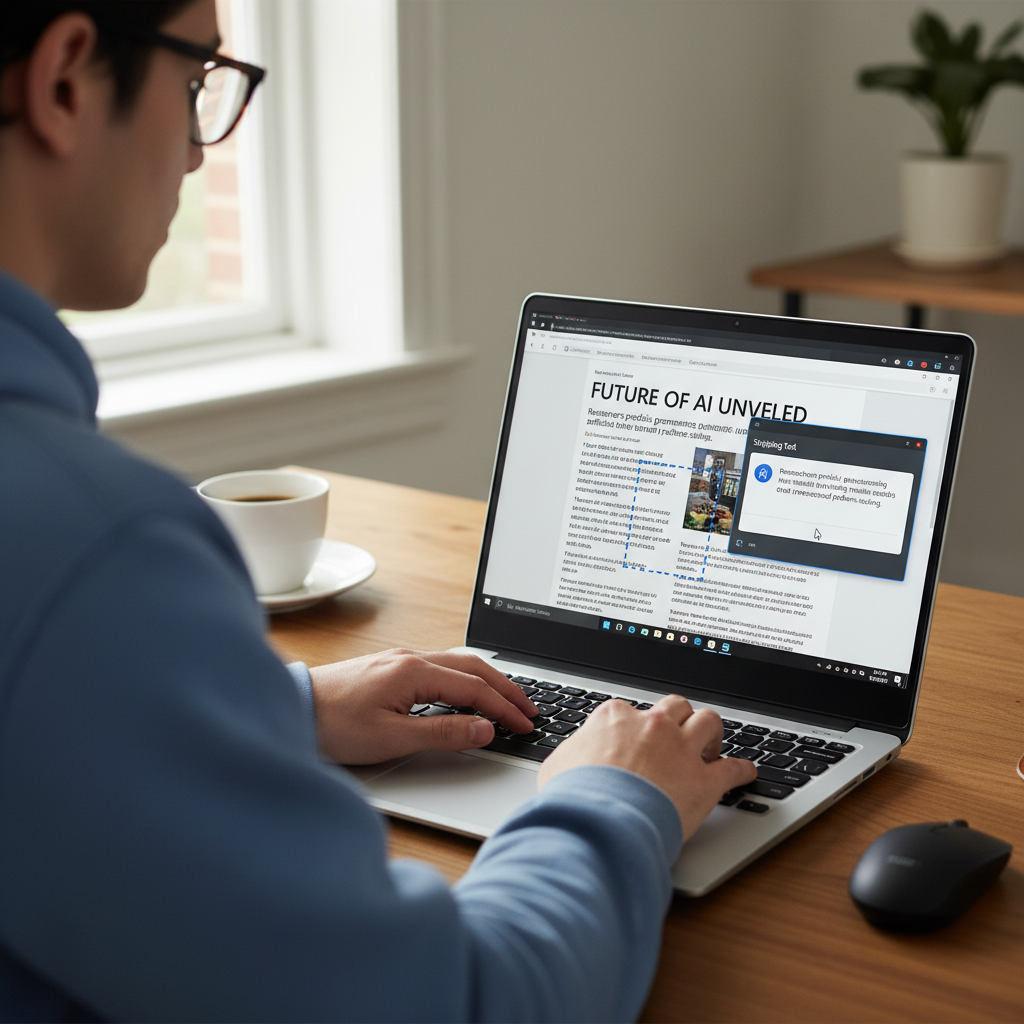
Optical Character Recognition (OCR) in apps like Snipping Tool, Camera, and Photos is one of the most helpful developments that is just around. This function will let you straight extract text from screenshots or images.
Assume you have taken a screenshot of a quotation you like or captured a picture of a menu from a restaurant. Right now, you could grab the text by typing it out or using outside tools. OCR built into Windows will let you copy and select the text from the image itself straight into an email, a Word document, or a message. It saves time, is quick, and basic.
Apple has already used its Neural Engine, which drives text recognition in both macOS and iOS, to provide this sort of capability in its Photos app. Microsoft is now extending this same intelligent capability to even more users and including it in the Windows ecosystem.
Apart from OCR, the Photos app could soon be able to identify backgrounds, objects, and people in your pictures. More remarkably, Microsoft is experimenting with methods to let you separate those items with a few clicks. You will thus be able to crop out the background of a person standing in front of a busy street or isolate a product from an image for an e-commerce listing without using Photoshop.
Especially for those without the time or knowledge to use sophisticated editing suites, these tools make photo editing far more accessible.
Generative AI in Paint and the Function of Hardware
More shockingly is what Microsoft intends for MS Paint. Long regarded as a basic tool for rapid sketches or pixel art, Paint might soon be an artificial intelligence-powered image generator.
Apparently, the Paint app has text-to-image capability, tested by the company. Picture typing, “a robot watering plants on the moon,” and Paint generates an image for you. Running on a variant of OpenAI’s DALL-E model, Bing Image Creator has already shown this type of generative artificial intelligence. Directing that power straight into Paint could help students, hobbyists, and casual users access AI creativity.
But running many of these AI tools will probably need something more: a Neural Processing Unit (NPU).
Designed especially for handling AI and machine learning chores, NPUs are specialized chips. Only Qualcomm’s Snapdragon processors, mostly found in ARM-based Windows laptops, included them until lately. But Intel’s forthcoming Meteor Lake chips and AMD’s new 7040-series CPUs are poised to provide NPU capability to conventional x86 PCs as well.
Why does this matter? AI systems with NPU-dependent running locally on your machine instead of in the cloud. That speeds things up more. It also guards your information and keeps private content—such as screenshots or pictures—from being sent to far-off servers for handling.
Right now, Windows 11 just makes use of NPUs for a few capabilities, including background blur in video conferences. But that might soon alter. Powered by the hardware you already have—or the next PC you purchase—these forthcoming upgrades could signal the start of a much more artificial intelligence-accelerated Windows experience.
Ultimately, Microsoft is not only including artificial intelligence for its own benefit. One click at a time, they are enhancing the apps you already use to help you somewhat simplify life.