- calendar_today August 25, 2025
.
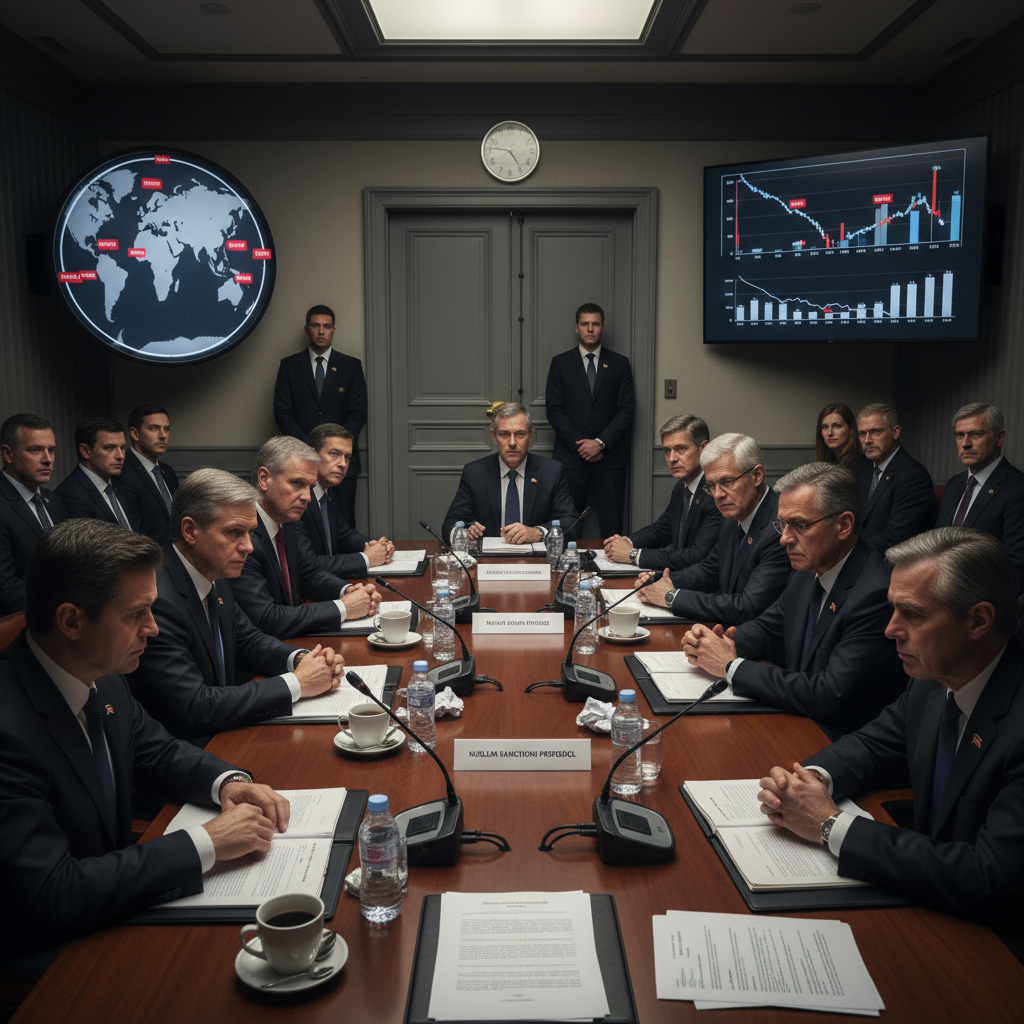
Germany, France, and the United Kingdom are ready to trigger the reimposition of United Nations sanctions against Iran, three European officials told CNN on Wednesday. The so-called “snapback” mechanism, which is part of the 2015 Iran nuclear deal, could be set in motion as early as Thursday.
The process takes 30 days to complete, meaning there is a narrow window for diplomacy. European leaders hope Tehran will use that time to reengage in serious negotiations, open its facilities to international inspectors and begin taking steps to come into compliance with its nuclear obligations.
Iran, however, has threatened severe retaliation if sanctions return. Their return could create further instability in a region already rocked by the recent fighting.
The snapback provision in the 2015 Joint Comprehensive Plan of Action (JCPOA) enables any member of the UN Security Council to restore UN sanctions on Iran if it violates the terms of the deal. The mechanism will expire in October, which has added urgency to European efforts.
Iran has significantly expanded its nuclear program since the United States under former President Donald Trump pulled out of the JCPOA, exceeding the agreed enrichment levels. Tehran maintains that its program is peaceful, but inspectors and analysts have warned that the program is moving closer to weapons-grade levels.
“Going back to the original JCPOA would be almost impossible,” Rafael Grossi, head of the International Atomic Energy Agency (IAEA), said on Wednesday.
U.S. Secretary of State Marco Rubio, who met with his European counterparts on Tuesday to coordinate efforts, called the snapback a “very powerful piece of leverage on the Iranian regime.”
Inspectors Return Amid Tense Climate
Iranian parliamentarians passed legislation earlier this month to suspend the country’s cooperation with international inspectors, but IAEA teams have recently been seen at Iranian nuclear facilities.
Grossi said on Wednesday that inspectors were back at the Bushehr nuclear power plant. “Today we are inspecting Bushehr,” he said at a news conference in Washington. “We are continuing the conversation so that we can go to all places, including the facilities that have been attacked.”
The IAEA’s ability to enforce safeguards on Iran’s nuclear facilities is rooted in the Nuclear Non-Proliferation Treaty (NPT), which Iran has not withdrawn from. The government has reportedly considered leaving the NPT if sanctions are reinstated.
Iranian Foreign Minister Abbas Araghchi said the IAEA was present to monitor fuel replacement at Bushehr after Iran’s Supreme National Security Council decided to allow it. However, he denied that the decision was part of any new agreement on “new cooperation.”
Fallout from Recent Conflict
Tensions have been rising between Iran and the West since Israel launched strikes on Iranian nuclear facilities in June, which launched a 12-day conflict. Iranian forces retaliated with missile strikes on Israeli cities, and U.S. forces entered the conflict in its final days, launching strikes against three Iranian sites.
The IAEA also withdrew its inspectors in July, citing an inability to safely monitor Iranian facilities during wartime. Satellite imagery has since shown signs of damage to entrances at Iran’s Isfahan Nuclear Technology Research Center.
Iran accused the agency of essentially providing Israel with justification for its attack by publicizing the ways in which Iran was not living up to safeguards rules.
Divisions Inside Iran
The decision to allow the IAEA inspectors back into certain facilities has already come under domestic criticism in Iran. Parliamentary member Kamran Ghazanfari decried Speaker Mohammad Bagher Ghalibaf’s comments to the Financial Times on Tuesday in which he endorsed the IAEA returning to some sites, labeling them an “explicit violation” of laws passed that suspend cooperation with the agency.
Iran’s parliament passed the legislation in July after the June conflict, which it framed as a foreign aggression against Iran and IAEA bias in its reporting.
Diplomatic Window Narrowing
European negotiators spoke with Iranian representatives in Geneva on Tuesday in a last-ditch effort to avoid sanctions being reimposed. European sources involved in the talks suggested little progress was made.
Leading up to the conflict, U.S. envoy Steve Witkoff was engaged in talks with Iran and other world powers on a new nuclear deal. Those talks broke down with the outbreak of hostilities.
Grossi suggested Wednesday that the coming month could still see the de-escalation of tensions. “Don’t forget that there is still time, even if there is the triggering thing, there is a month, and many things could happen,” he said.
For now, however, Iran faces increasing pressure both from the West and from its own political system. With the snapback mechanism set to expire in October, the coming weeks could decide whether diplomacy lives or sanctions and confrontation will define the next chapter in Iran’s nuclear saga.