- calendar_today August 29, 2025
Michigan has experienced its fair share of economic booms and busts. From the auto sector’s peaks and valleys to the housing bust and pandemic, the state has weathered it all. Now that inflation rates are starting to recede nationwide, Michigan is embarking on a new era—one of guarded hopefulness. While pressures from rising prices are subsiding, the effect of this economic turn is reverberating within local communities, businesses, and workers in distinct manners.
So what does falling inflation actually indicate for Michigan? And how are various industries reacting to this shift?
A Sigh of Relief After years of intense pressure
In the last two years, residents of Michigan have experienced the pinch of inflation in virtually every area of everyday life—grocery items, gas prices, rent, and utility expenses. Throughout Detroit to Grand Rapids and small towns such as Alpena or Marquette, the increasing cost of living prompted numerous families to rein in their expenses.
Now at last, inflation is slowing down. The pace at which prices are increasing has reduced, and in certain regions, prices have even stabilized. Even though prices haven’t fallen to pre-pandemic rates by any means, a sense of panic and uncertainty has dissipated.
This is particularly apparent in energy and fuel costs. Following years of rollercoaster gas prices and record-breaking winter heating bills, relief is welcome throughout the state, especially in rural areas dependent on transportation.
Small Businesses Begin to Breathe Easier
Michigan’s economy depends on small and medium-sized enterprises—from suburban tool-and-die shops to college town mom-and-pop eateries. At times of high inflation, most of these enterprises had to increase prices, reduce employees, or postpone plans for expansion in order to survive.
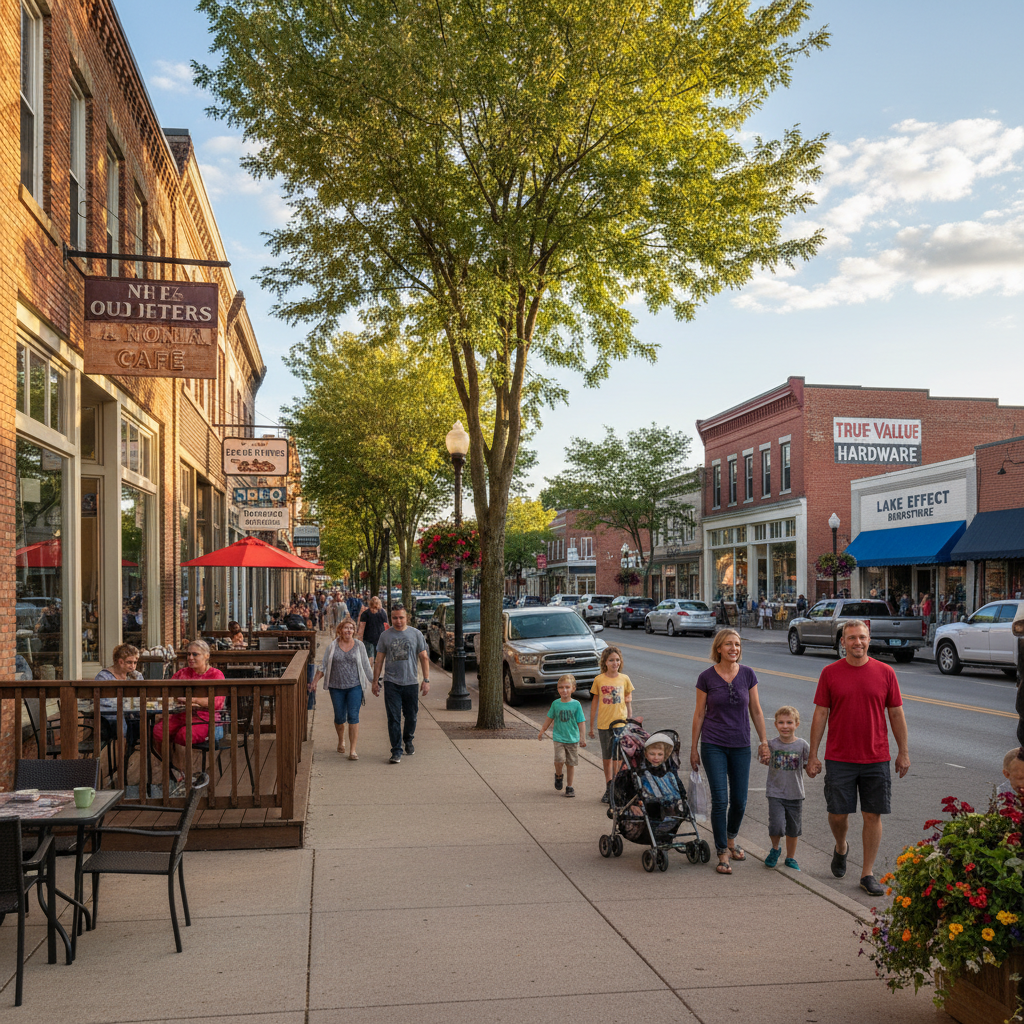
With inflation easing, entrepreneurs are at last enjoying cost stability. Supply chain disruptions are dissipating, wholesale prices have stabilized, and foot traffic is rebounding. Consequently, most local companies are gaining confidence, investing in personnel and services, and even eyeing growth.
Consider, for instance, neighborhood retailers. Back at the inflation peak, many of them wrestled with delays in receiving inventory and increasing the cost of goods. Nowadays, they can provide more competitive prices and improved inventory management, keeping them alive against big-box competitors.
Detroit’s Auto Industry at a Turning Point
Michigan’s most legendary industry—the automobile business—had a mixed relationship with inflation. On the one hand, car companies were subject to rising material and labor expenses. On the other, they saw record sales of both traditional and electric vehicles.
As inflation slows down, the automotive sector is beginning to stabilize. Parts and production costs are less stressful, and demand has slightly cooled but is still solid. That’s good news for companies like Ford, GM, and Stellantis, which are now resetting—optimizing leaner production lines, wiser pricing, and long-term EV planning.
For auto workers, it could also result in more stabilized wage bargaining and improved job security, particularly in the wake of high-profile union negotiations and work stoppages in recent years.
Jobs and Wages: A Mixed Picture
Michigan’s job market is demonstrating steady growth. There are more jobs available, particularly in healthcare, manufacturing, logistics, and service industries. Unemployment is still relatively low, and job seekers have more choices than they did one year ago.
But the pay story is more complex.
While companies are continuing to pay more to recruit and keep employees, the pace of wage increases has slowed along with inflation. Some employees are discovering that although prices no longer are increasing as quickly, their paychecks don’t go as far as they once did. For lower-income families, particularly in urban areas such as Flint or Saginaw, this translates into the economic recovery not feeling as even.
Housing: Still a Headache
One sector where inflation has not provided much relief is housing. Although the general rate of inflation is lower, house prices in most of Michigan are still high. This is particularly the case in popular suburban neighborhoods and up-and-coming towns such as Ann Arbor and Traverse City.
At the same time, mortgage interest rates are still elevated. For first-time homebuyers, this creates a frustrating situation: home prices haven’t dropped, but borrowing money is still expensive. Meanwhile, rent prices remain stubborn, particularly in metro areas.
For Michigan’s middle-class and working families, the housing crunch continues to be a major stress point—even as other costs settle down.
Consumers Are Spending, but Wisely
As inflation fades, consumer habits are changing. Folks are optimistic but cautious. They’re spending more generously than they did last year, but they’re also spending smarter about where their money is going.
Major items such as home appliances, vacations, and used cars are on shopping lists again, but consumers are biding their time, price-checking, and valuing. This kind of consumer attitude is infusing local economies without heating them up.
In towns such as Lansing or Kalamazoo, this equilibrium is producing a more healthy economic climate—one in which companies are experiencing stable sales without having to resort to forced markups.
A Fragile but Hopeful Recovery
Michigan’s reaction to falling inflation demonstrates a state adapting on the fly. Companies are adjusting. Employees are cautiously optimistic. And policymakers are concentrating on long-term viability—especially when it comes to energy, infrastructure, and education.
Nevertheless, the path forward is not trouble-free. International tensions, shifting consumer preferences, and lingering supply chain conflicts could all ruffle the waters again. But for the time being, Michigan appears to be stabilized.
Citizens throughout the state are paying close attention. Following decades of economic volatility, even slight hints at progress are a big deal. If trends continue, Michigan might not only rebound—it could emerge healthier than ever before.