- calendar_today August 9, 2025
After years of uncertainty triggered by the pandemic and compounded by high interest rates, Michigan’s commercial real estate (CRE) sector is beginning to stabilize in 2025. While recovery hasn’t been uniform across all asset classes, key segments—particularly industrial and suburban retail—are showing steady progress.
This rebound comes amid a broader national shift in the commercial market, where capital is cautiously returning, and local fundamentals are beginning to matter more than national trends. For Michigan, that means the resilience of its manufacturing base, strategic logistics location, and shift in consumer behavior are all playing defining roles.
Industrial Real Estate: Still Michigan’s Powerhouse
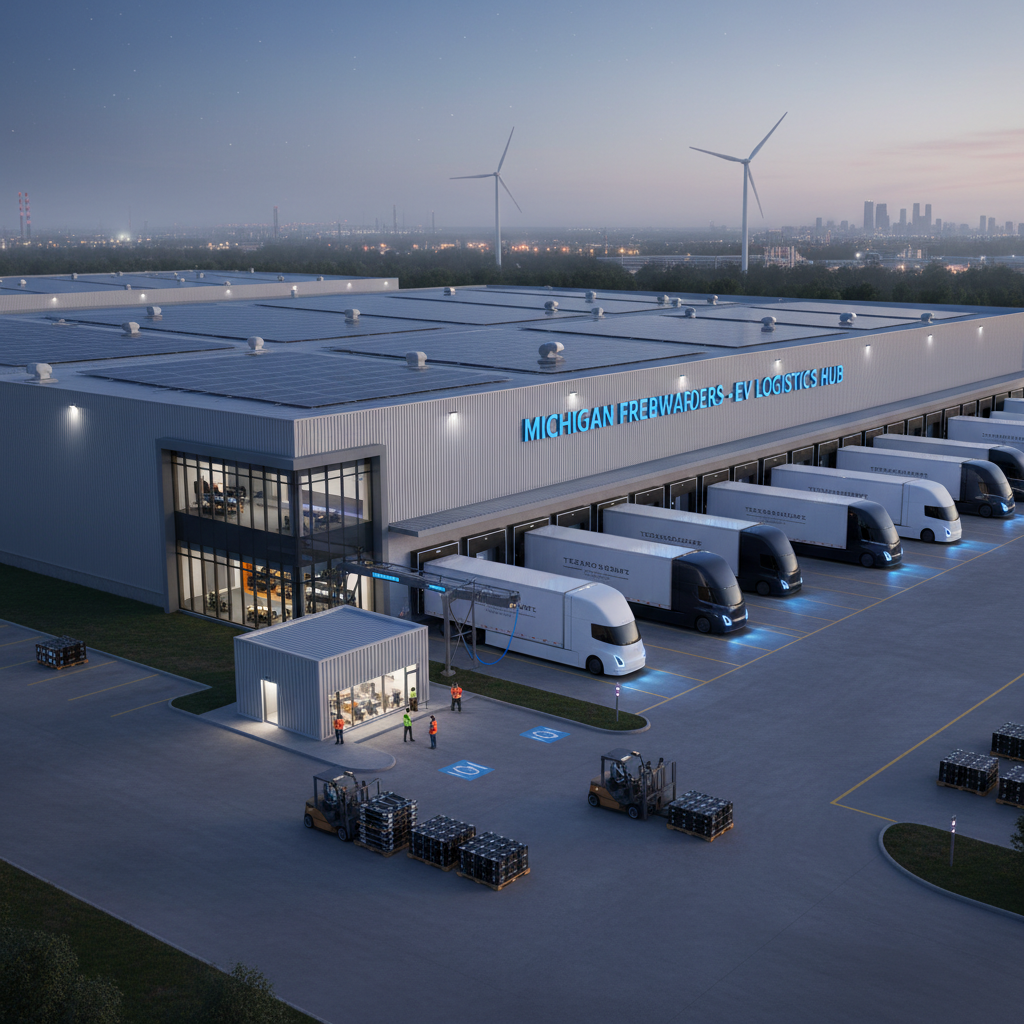
Michigan’s industrial market continues to lead the CRE recovery in 2025. Bolstered by its legacy in automotive and advanced manufacturing, the state’s industrial footprint has grown with the rise of electric vehicles (EVs) and related supply chain expansions.
In cities like Detroit, Grand Rapids, and Lansing, warehouse and logistics facilities are seeing record-low vacancy rates. According to the 2025 Q2 report from CBRE, Michigan’s industrial vacancy rate sits around 3.9%, down from over 5% a year prior. Rental rates have also risen by 8% year-over-year as demand outpaces new supply.
“Manufacturers and distributors are optimizing their logistics networks, and Michigan remains a key link between the Midwest and Canadian markets,” says Darnell Hughes, a Detroit-based industrial broker. “We’re seeing renewed investment in build-to-suit projects, especially near major interstates and rail corridors.”
Companies like Rivian and LG Energy Solution are actively expanding footprints, with new facilities breaking ground in southeast Michigan’s emerging EV corridor.
Retail: Adapting to a Hybrid Consumer Landscape
Retail real estate in Michigan is undergoing transformation rather than decline. Malls are repositioning, strip centers are gaining traction, and mixed-use developments are on the rise.
Foot traffic in open-air centers has returned to near pre-pandemic levels in suburban markets like Troy, Novi, and Ann Arbor, where population stability and local spending patterns remain strong. This shift toward convenience retail has encouraged redevelopments that blend restaurants, services, and experiential tenants.
“In 2025, the conversation is no longer about retail apocalypse,” says Lisa Tran, VP of leasing at a Michigan-based REIT. “It’s about reallocation—moving capital from outdated mall formats into high-traffic, service-oriented retail.”
While big-box chains continue to close underperforming stores, localized tenants, including urgent care clinics, boutique fitness studios, and regional grocers, are filling the void.
In downtown Detroit, retail remains challenged by hybrid work patterns, but pop-up concepts and adaptive reuse projects are keeping ground-floor activity alive.
Office Space: Flight to Suburban and Flexible Layouts
Office recovery in Michigan mirrors the national trend—uneven and highly dependent on location and layout. Downtown cores in Detroit and Flint still contend with elevated vacancy rates (averaging 19.4%), but suburban office parks are beginning to bounce back.
Employers looking for shorter leases and cost-effective alternatives are gravitating toward class B and flex office spaces in Livonia, Farmington Hills, and Southfield. These locations offer better parking, lower rents, and access to talent—an increasingly important metric as companies compete in a hybrid work environment.
Co-working operators like Bamboo Detroit and Industrious have expanded their suburban presence, catering to the demand for shared, scalable office environments.
“The return-to-office mandates we’ve seen in early 2025 are boosting interest in smaller, flexible suburban sites,” notes Courtney Hayes, a CRE analyst with Midwest Capital Partners. “Tenants want optionality—not necessarily long-term commitments.”
Still, high borrowing costs and shifting tenant expectations make new office development a tough sell. Most of the office activity is in renovations, amenity upgrades, and space consolidations.
Capital Markets: High Rates Still Cast a Shadow
While property fundamentals are improving, Michigan’s CRE capital markets remain constrained. High interest rates—though now stabilized—are still dampening transaction volumes. Lending activity is cautious, with banks favoring well-leased industrial or essential retail assets.
Cap rates across most asset classes have expanded by 75 to 100 basis points since 2023, reflecting investor risk premiums in uncertain economic conditions.
Private investors and local buyers are more active than institutional players in 2025, focusing on value-add acquisitions, sale-leasebacks, and distressed retail properties.
The pipeline of new commercial construction has slowed significantly outside of industrial, as developers wait for clearer economic signals and cost stability.
Policy and Incentives: Local Governments Play a Bigger Role
Municipalities across Michigan are becoming more active participants in the CRE recovery. Tax increment financing (TIF) zones, brownfield redevelopment credits, and infrastructure grants are supporting projects that may not otherwise pencil out in today’s interest rate environment.
In Kalamazoo and Marquette, small-scale mixed-use projects are leveraging state-level housing and commercial development incentives to revitalize aging commercial corridors.
The Michigan Economic Development Corporation (MEDC) has also expanded support for site readiness programs to attract national industrial tenants and logistics players.
Outlook: A More Resilient, Localized CRE Market
Michigan’s CRE recovery in 2025 is less about rapid growth and more about durability. While headwinds remain—particularly for the office and capital markets—the broader narrative is one of resilience. Industrial space is thriving, retail is evolving, and office demand is recalibrating rather than disappearing.
For investors and developers, the state’s strategic geography, growing EV ecosystem, and proactive municipalities offer a compelling if cautious path forward.
“The market is becoming more nuanced,” concludes Hughes. “Michigan’s story in 2025 isn’t just about recovery—it’s about adaptation.”
Final Takeaways
Industrial CRE remains Michigan’s strongest sector, with demand driven by logistics and EV growth. Retail is rebounding in suburban and mixed-use formats, while urban retail continues to evolve. Suburban office parks are outperforming downtown cores, as hybrid work reshapes demand. Capital remains tight due to interest rates, but local investors and policy incentives are helping bridge the gap.