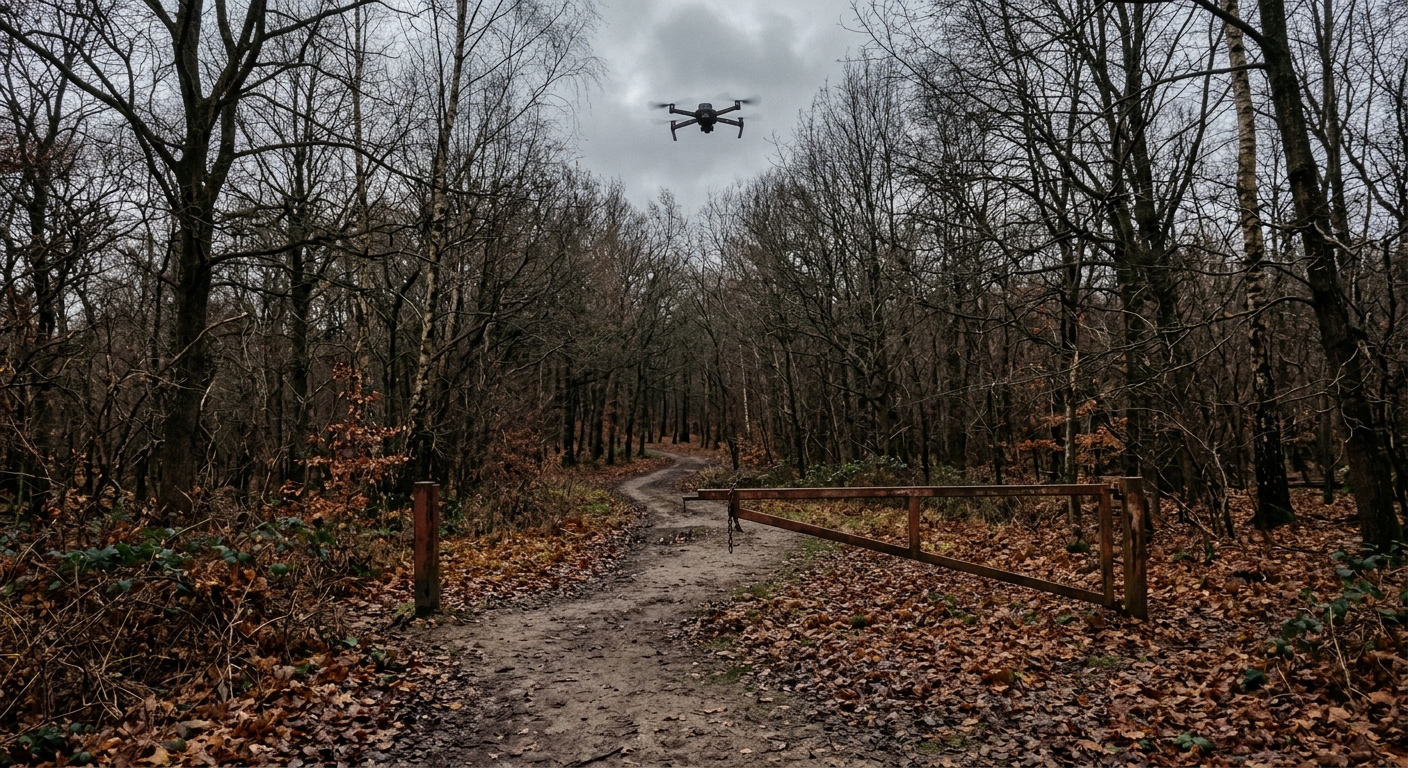
AI-generated illustration; not a photograph of the reported event.
- calendar_today October 28, 2026
Camp Grayling Closure Coincides With Deer Season
The Michigan Army National Guard has temporarily closed a significant portion of Camp Grayling, a move that overlaps with the opening of the firearm deer season on November 15. This closure, from November 7 to 22, allows the US Department of Defense to conduct evaluations of combat drones on land traditionally used by dozens of hunters. Local residents like Ed Palmer, whose family has camped in Palmer’s Corner for 96 years, are affected as this marks their first absence from the area during deer season.
Drone Evaluations Take Priority
The US military’s interest centers on testing battlefield-ready drone technologies. Camp Grayling, the largest National Guard training facility in the country, stretches across Crawford, Kalkaska, and Otsego counties. The closure impacts approximately 21,633 acres—about 33.8 square miles—of the facility’s lands, which is less than 0.3% of Michigan’s state and federal public hunting lands. Within this area, drones will be evaluated by soldiers as part of the Department of Defense's $1 billion Drone Dominance program, aiming to purchase over 200,000 small, inexpensive drones by 2027.
Local Economic and Community Impact
Local officials and business leaders are expressing concern over the camp Grayling closure, fearing negative economic impacts. The firearm deer season is a critical period for businesses like hunting lodges, sporting goods stores, and gas stations. Lacey Stephan, Grayling Township Supervisor, noted that tourism and outdoor activities are major economic drivers. Similarly, local business owner Josh Greenberg worries that the lack of advance coordination could disappoint customers traveling for the hunting season and discourage future visits. Hunters from various states had already planned their trips before the closure was announced.
Debate Over Purpose: Training vs. Testing
The nature of the military activities at Camp Grayling has heightened tensions between local residents and the Michigan Army National Guard. Some, including local officials, contend that the base should serve primarily as a military training facility, not a proving ground for military drone testing. While township officials and community members argue that the operations cross a boundary, Guard representatives insist that the focus is on drone evaluation. Colonel Lucas Lanczy, Camp Grayling’s garrison commander, stated that soldiers will assess which drones best meet combat needs, distinguishing evaluation from technical testing. According to Lanczy, this is a response to the Department of Defense's drive to modernize in an era of rapidly advancing drone warfare.
Ongoing Tensions and Future Collaboration
The Camp Grayling closure falls against a backdrop of ongoing disagreements between the National Guard Michigan and surrounding communities. In recent years, multiple local governments passed resolutions opposing the Guard’s bid to expand its training footprint for activities including drone operations. A smaller-scale memorandum of understanding was established in 2023, allowing for special-use permits on certain state lands but excluding the currently affected Range 30 Complex. Letters opposing the current closure have been drafted by township officials, who hope more collaboration could minimize negative community impacts in the future. For many hunters and residents, the sudden nature of the closure and its timing during the cherished deer season remain points of contention.
Looking Forward
The temporary restriction of access to Camp Grayling underscores a broader debate about the balance between national defense priorities and traditional local activities. While the Department of Defense emphasizes the need to rapidly deploy effective combat drones, local stakeholders call for greater transparency and involvement when changes affect long-standing community traditions and economic stability. As drone technology continues to evolve, these discussions are likely to persist in regions hosting military training facilities.
Source: bridgemi.com.